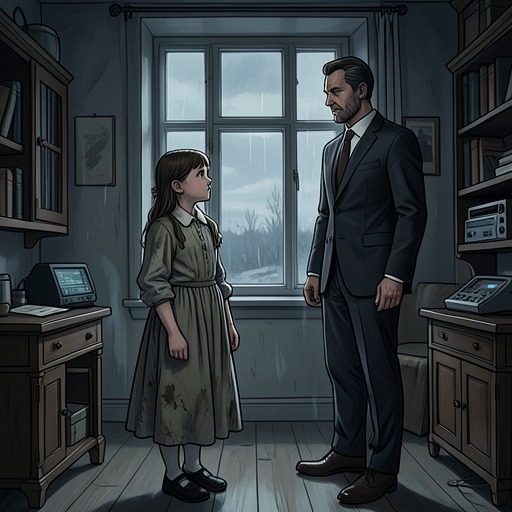
Trina Garnett fire
Just MercyThe Trina Garnett fire was a fatal house fire that became the basis for a second-degree murder conviction and a mandatory life-without-parole sentence for a fourteen-year-old girl. Trina and her friend said the blaze was accidental; the boys’ mother accused Trina of setting it deliberately. The case’s lasting force lies in the distance between that disputed account of a child’s act and the punishment imposed: the sentencing judge found no intent to kill, yet the law gave him no alternative to condemning her to die in prison.
Background and the Fire
Trina’s childhood had been marked by loss and instability. Her mother, Edith, died when Trina was nine. After Trina’s older sisters fled because of abuse by Walter, that abuse focused on Trina and her sisters Lynn and Lynda. The girls ran away and roamed the streets of Chester, sometimes eating from garbage cans and sleeping in parks or public bathrooms. Temporary refuge with relatives could be disrupted by further violence or death, leaving Trina homeless again. Her mother’s death, abuse, and desperate circumstances worsened her emotional and mental health; when she became acutely distressed, her sisters sometimes found relatives to take her to a hospital, but she was never allowed to stay long enough to become stable or recover.
Late at night in August 1976, Trina, then fourteen, and her sixteen-year-old friend Francis Newsome climbed through a window into a row house in Chester. They wanted to talk to the boys who lived there, although the boys’ mother had forbidden her children to play with Trina. Inside, Trina lit matches to find her way to the boys’ room. The house caught fire and spread quickly. Two boys, asleep in the home, died from smoke asphyxiation. Their mother said Trina had started the fire intentionally; Trina and Francis maintained that it was an accident. The evidence establishes the fatal outcome and the conflicting accounts, not a settled explanation of how the fire began.
Arrest and Adult Trial
The boys’ deaths left Trina traumatized. When police arrested her, she could barely speak, and she appeared so listless and nonfunctional that her appointed lawyer thought she was incompetent to stand trial. A person found incompetent cannot be tried in adversarial criminal proceedings unless they become well enough to defend themselves; accused people facing trial are entitled to treatment and services. Trina’s lawyer, however, did not file the motions or present the evidence needed to support an incompetency determination. He also failed to challenge the State’s decision to try her as an adult. The lawyer was later disbarred and jailed for unrelated criminal misconduct.
As a result, Trina was made to stand trial for second-degree murder in an adult courthouse. Francis testified against her in exchange for the charges against her being dropped. Trina was convicted, and the proceedings moved to sentencing. The case thus turned not only on the disputed question of how the fire started, but also on a sequence of decisions that left a traumatized child without a pursued incompetency claim and without a challenge to adult prosecution.
Mandatory Sentence and Its Consequences
Delaware County Circuit Judge Howard Reed found that Trina had no intent to kill. Under Pennsylvania law, however, he could not take that absence of intent into account when sentencing her for second-degree murder. Nor could he consider her age, mental illness, poverty, abuse, or the tragic circumstances surrounding the fire. The law prescribed a single punishment: life imprisonment without the possibility of parole.
Judge Reed expressed serious misgivings about imposing that sentence. He called it the saddest case he had ever seen, but his judgment could not alter the mandatory penalty. Trina was therefore condemned to spend her life in prison for a tragedy committed when she was fourteen, even as the judge acknowledged the absence of intent to kill.
Significance
The case brings together the conditions surrounding a child’s life and a legal process that treated the resulting tragedy as though those conditions could not matter. Trina’s history included bereavement, abuse, homelessness, and serious mental-health problems; at trial, her apparent inability to function prompted her own lawyer to question her competence. Yet the defense did not pursue that question, did not contest adult prosecution, and the sentencing law barred the judge from weighing her background or lack of intent.
The book’s broader argument about adolescent judgment gives the case added significance. It describes how young teenagers have less life experience, struggle to imagine consequences and generate choices, and are especially vulnerable when those developmental limits meet environments shaped by abuse, violence, neglect, and the absence of loving care. Trina’s case illustrates the human stakes of that argument: a fatal fire, disputed as accidental or intentional, became an irreversible sentence imposed on a child whose circumstances the court was not permitted to consider.